Monty Don has spent decades cultivating Longmeadow, his two-acre garden in Herefordshire, into one of the most admired gardens in Britain. Through years of presenting BBC Gardeners' World, he has shared not only his planting philosophy but also a deeply practical approach to the tools of the trade. His message is disarmingly simple: you do not need a shed full of gadgets to garden well. You need seven tools, and you need them to be good.
"You really only need a spade, fork, rake, hoe, trowel, secateurs and a knife," Monty has said repeatedly. It is a statement that cuts through the noise of an industry that would happily sell you a different tool for every conceivable task. In Monty's view, a small collection of well-chosen, well-made tools will serve you better than a hundred cheap ones. The logic is unanswerable: a good tool fits your hand, responds to the soil, and lasts a lifetime.
In this guide, we examine each of those seven tools in detail. We look at exactly what Monty uses and why, how each tool should be employed in the garden, and what to look for if you are buying one for the first time. Whether you are just starting out or replacing a tired old set, this is the only buying guide you will need.
Tool 01 of 07
1. The Trowel — Sneeboer Old Dutch Style
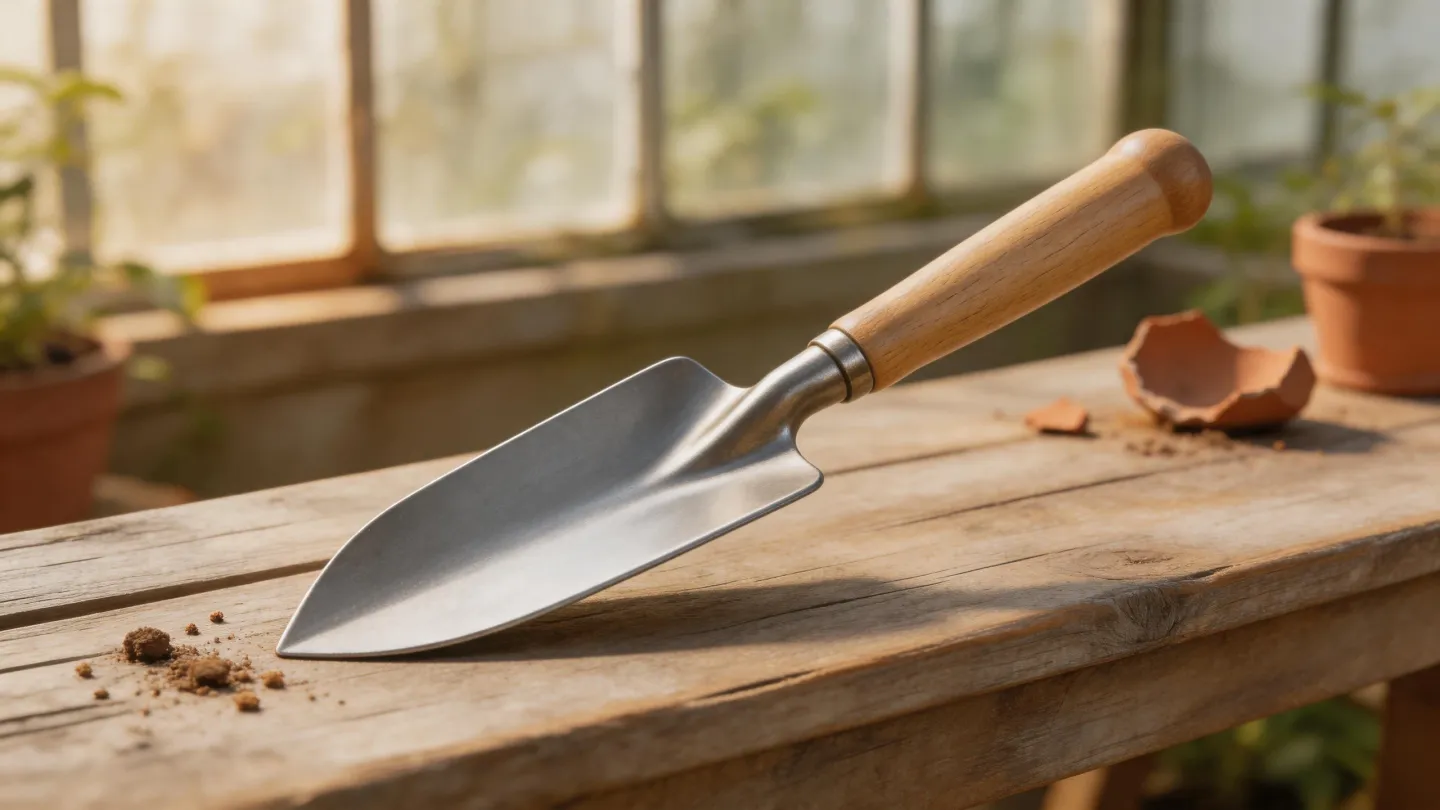
If there is one tool that has become synonymous with Monty Don, it is the Sneeboer Old Dutch Style Planting Trowel. He has described it as his single favourite tool — the one he reaches for more than any other, the one he would save if his shed caught fire. It is a bold claim, but spend any time using this trowel and you will understand why.
The Sneeboer Old Dutch Style trowel is hand-forged in the Netherlands by the Sneeboer family, who have been making garden tools since 1913. Each trowel is crafted from a special boron steel alloy that is both incredibly strong and naturally rust-resistant. The blade is narrower and longer than a typical trowel — shaped more like a traditional Dutch planting tool from the eighteenth century — which gives it remarkable precision when planting bulbs, seedlings, and small perennials. The narrow profile lets you work in tight spaces between established plants without disturbing their roots, and the slightly concave blade holds soil beautifully when you need to scoop and move it.
What sets this trowel apart from mass-produced alternatives is the forging process. The blade and tang are made from a single piece of steel, which means there is no weld joint to weaken or snap. The ash wood handle, grown on the Sneeboer estate, is shaped to fit the natural grip of the hand. After a few hours of use, the handle begins to polish from the oils in your skin, developing a patina that is uniquely yours. This is a tool that improves with age.
In practical terms, the Sneeboer trowel excels at planting — particularly bulbs and plug plants. Its long, narrow blade cuts into soil with minimal effort, and the pointed tip is perfect for making planting holes of exactly the right depth. Monty also uses it for dividing small clumps of perennials, levering out weeds from between paving stones, and working compost into the surface of containers. It is, in short, the most versatile hand tool in the garden.
When buying a trowel, look for one where the blade and handle connection is forged from a single piece rather than welded or riveted. Check that the handle is comfortable in your hand — grip varies enormously between manufacturers. The blade should have a slight concavity and a pointed tip. Avoid trowels with painted or coated blades, as the coating will chip and trap moisture beneath it, accelerating rust. A good trowel should feel balanced, with the weight sitting just ahead of your grip.
"This trowel has been my companion for years. It fits my hand like a glove. I've tried dozens of trowels but I always come back to this one — it is simply the best planting tool I have ever used."
— Monty Don on the Sneeboer Old Dutch Style Trowel
Where to Buy
Prices checked April 2026. As an Amazon Associate we earn from qualifying purchases.
Tool 02 of 07
2. The Digging Spade
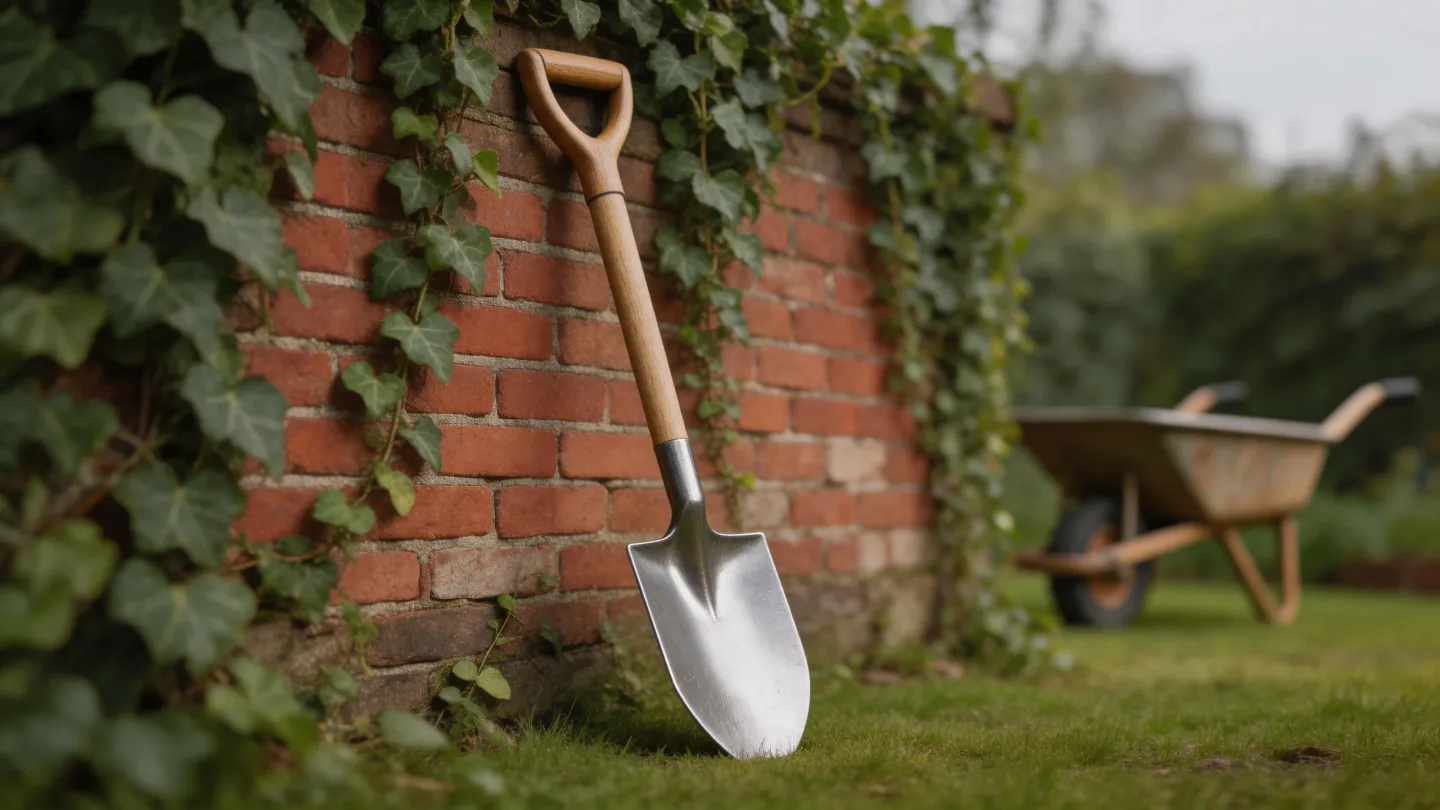
The digging spade is the workhorse of any garden. It is the tool that breaks new ground, edges borders, digs planting holes for shrubs and trees, and turns over soil in spring and autumn. Monty Don considers a good spade absolutely indispensable and reaches for it almost daily at Longmeadow, whether he is creating a new bed, transplanting a mature shrub, or simply turning compost.
When Monty talks about spades, he draws a clear distinction between a digging spade and a border spade. A digging spade has a larger, heavier blade — typically around 28 centimetres long and 19 centimetres wide — designed for serious soil work. A border spade is smaller and lighter, intended for working in established beds where space is tight. For your first spade, Monty recommends a standard digging spade, as it covers the widest range of tasks.
The most important feature of a good spade is the connection between blade and shaft. The strongest construction is what is known as a solid socket or strapped construction, where steel from the blade extends up the shaft for several inches, reinforcing the point of greatest stress. Avoid spades where the blade is simply pushed into a ferrule, as these will inevitably loosen and wobble. The shaft itself should be made from ash or, increasingly, fibreglass with a soft-grip coating. Ash has a natural spring to it that absorbs shock and feels alive in the hands. The handle at the top can be T-shaped or D-shaped — this is a matter of personal preference, though Monty tends to favour a YD handle which offers a comfortable grip without restricting the angle of your wrist.
To use a spade properly, push the blade into the soil using your foot, keeping the shaft vertical. Lever the soil up by pulling the handle towards you, then lift and turn. For deep digging, work in a trench system, moving forwards and turning each spadeful into the trench behind you. This technique, known as single digging, is the foundation of soil preparation and something Monty demonstrates frequently on Gardeners' World. Keep the blade clean and sharp — a sharp spade cuts through roots and turf far more efficiently than a blunt one.
"Buy once, buy well. A good spade will outlast you. I have spades that belonged to my father, and they are still going strong."
— Monty Don
Where to Buy
Prices checked April 2026. As an Amazon Associate we earn from qualifying purchases.
Tool 03 of 07
3. The Border Fork
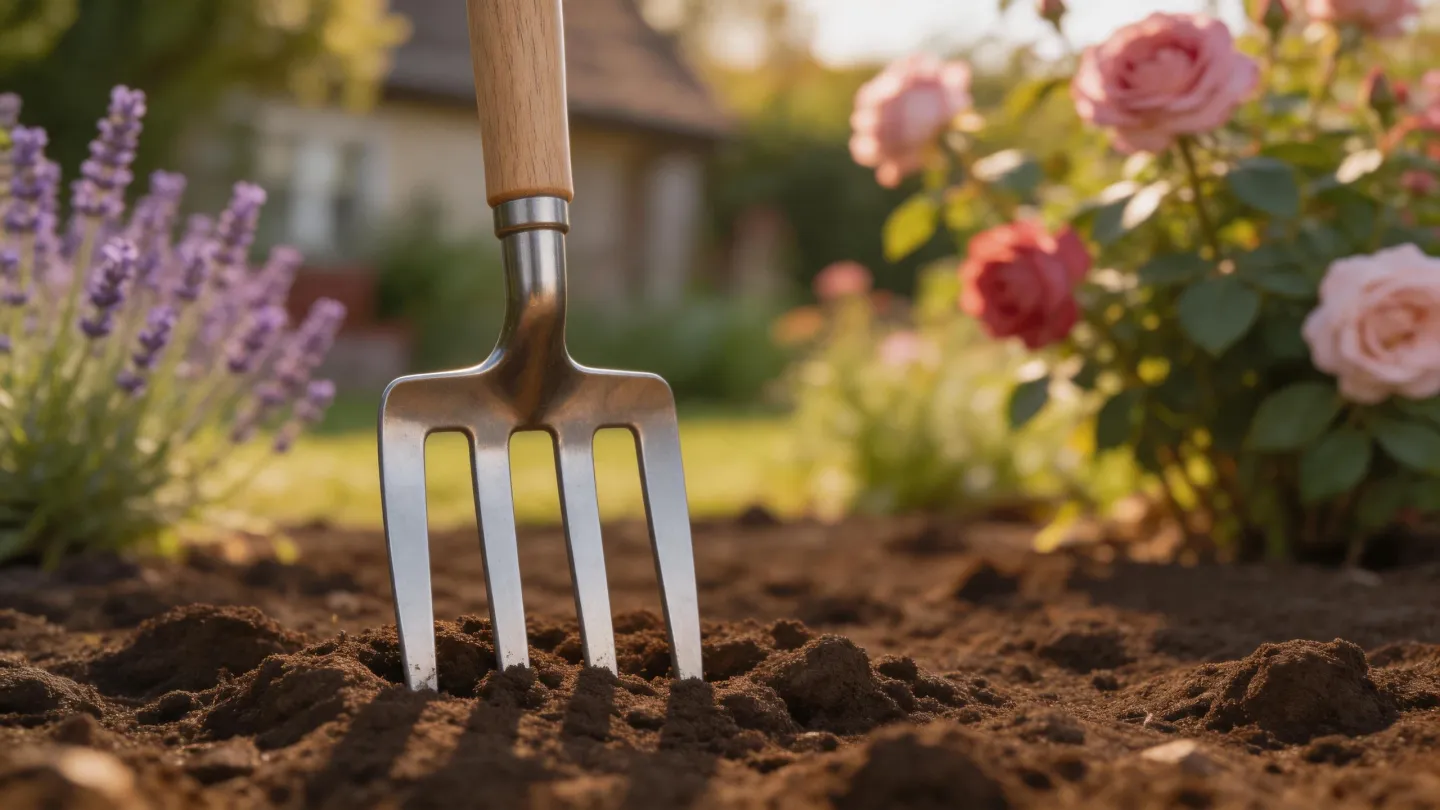
The fork is the spade's essential partner. Where a spade cuts and slices, a fork loosens and aerates. Monty Don uses a border fork — slightly smaller than a full-size digging fork — because it is lighter, more manoeuvrable, and better suited to working around established plants. At Longmeadow, where beds are densely planted and every inch counts, the border fork earns its place every single day.
A border fork typically has four flat tines, each about 23 centimetres long, mounted on a shaft of roughly 70 centimetres. The tines should be square or rectangular in cross-section for maximum strength — round tines tend to bend when hitting stones or thick roots. The fork is indispensable for loosening compacted soil without inverting it, which preserves the soil structure and the ecosystem of organisms that live within it. This is particularly important in no-dig gardening, an approach Monty has increasingly embraced.
Beyond soil work, the fork excels at lifting plants for division, working compost and mulch into the surface of beds, breaking up clods after digging, and harvesting root vegetables like potatoes and parsnips without slicing them in half. Monty also uses his fork to aerate lawns by driving it in at regular intervals across compacted turf — a simple technique that dramatically improves drainage and grass health.
When selecting a fork, the same construction principles apply as with a spade: look for a solid socket connection and a comfortable handle. The tines should be forged, not stamped, and made from hardened steel that will hold up against stony ground. Test the tines by pressing them sideways — they should flex slightly but spring back straight. If they bend easily and stay bent, the steel is too soft. A good fork will ring like a tuning fork when you tap it against something solid.
"A fork is essential for working compost into soil. I use mine more than my spade, if I am honest. It does everything a spade does, but more gently."
— Monty Don
Where to Buy
Prices checked April 2026. As an Amazon Associate we earn from qualifying purchases.
Tool 04 of 07
4. Bypass Secateurs
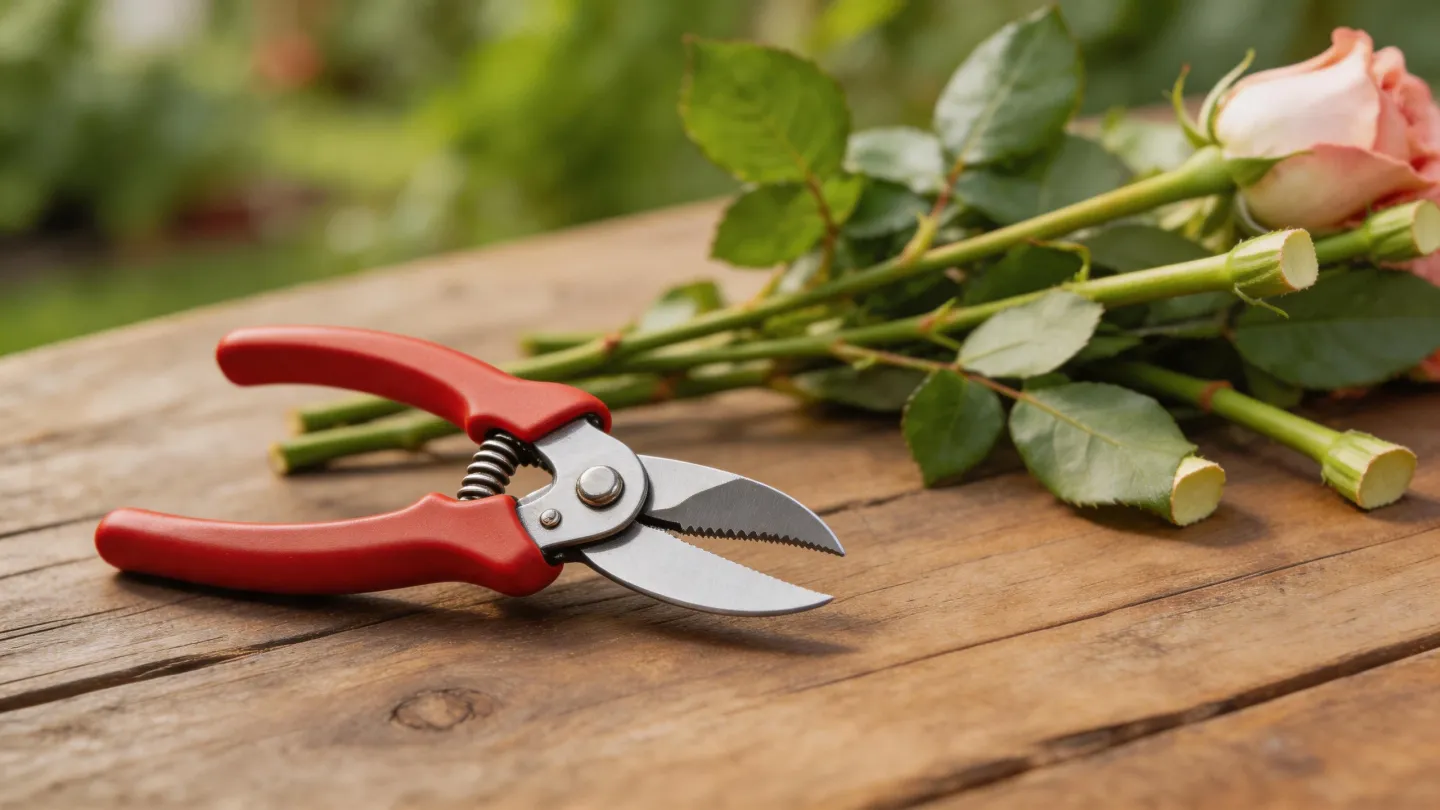
Secateurs are the gardener's constant companion. Monty Don keeps a pair in his back pocket at all times when he is in the garden, ready to deadhead a fading bloom, snip a wayward shoot, or take a cutting from a plant that catches his eye. He is emphatic about one thing: always use bypass secateurs, never anvil. The distinction matters enormously.
Bypass secateurs work like scissors — two curved blades pass each other, making a clean, precise cut that causes minimal damage to plant tissue. Anvil secateurs, by contrast, press a single blade down onto a flat surface, which crushes the stem rather than cutting it. Crushed stems heal slowly and are far more susceptible to disease and rot. For any living plant material, bypass is the only sensible choice. Anvil secateurs have their place for cutting dead wood, but if you are buying one pair, bypass is the answer.
The market leader for decades has been Felco, and with good reason. The Felco Model 2 is perhaps the most popular secateur in the world — used by professional gardeners, viticulturists, and horticulturalists everywhere. It is fully serviceable, meaning every component can be replaced individually: blades, springs, handles, even the adjustment bolt. This means a single pair of Felco 2s can last a lifetime with proper maintenance. Monty has also spoken favourably about Niwaki secateurs, a Japanese-influenced brand that produces exquisitely sharp tools, and about Tobisho, traditional Japanese hand-forged secateurs that are works of art in their own right.
When buying secateurs, the most important consideration is hand size. Secateurs come in different sizes and in right- and left-handed models. Try before you buy if at all possible — the secateurs should sit comfortably in your palm with the handles fully open, and you should be able to close them fully without straining. The cutting blade should be made from hardened steel and, ideally, be replaceable. Check that the spring mechanism is robust — a weak spring makes for tiring, inefficient cutting. Finally, choose a pair with a reliable locking mechanism to keep them safely closed in your pocket.
"Clean cuts heal faster. Always use bypass, never anvil. And keep them sharp — blunt secateurs tear rather than cut, and that invites disease into the plant."
— Monty Don
Where to Buy
Prices checked April 2026. As an Amazon Associate we earn from qualifying purchases.
Tool 05 of 07
5. The Garden Rake
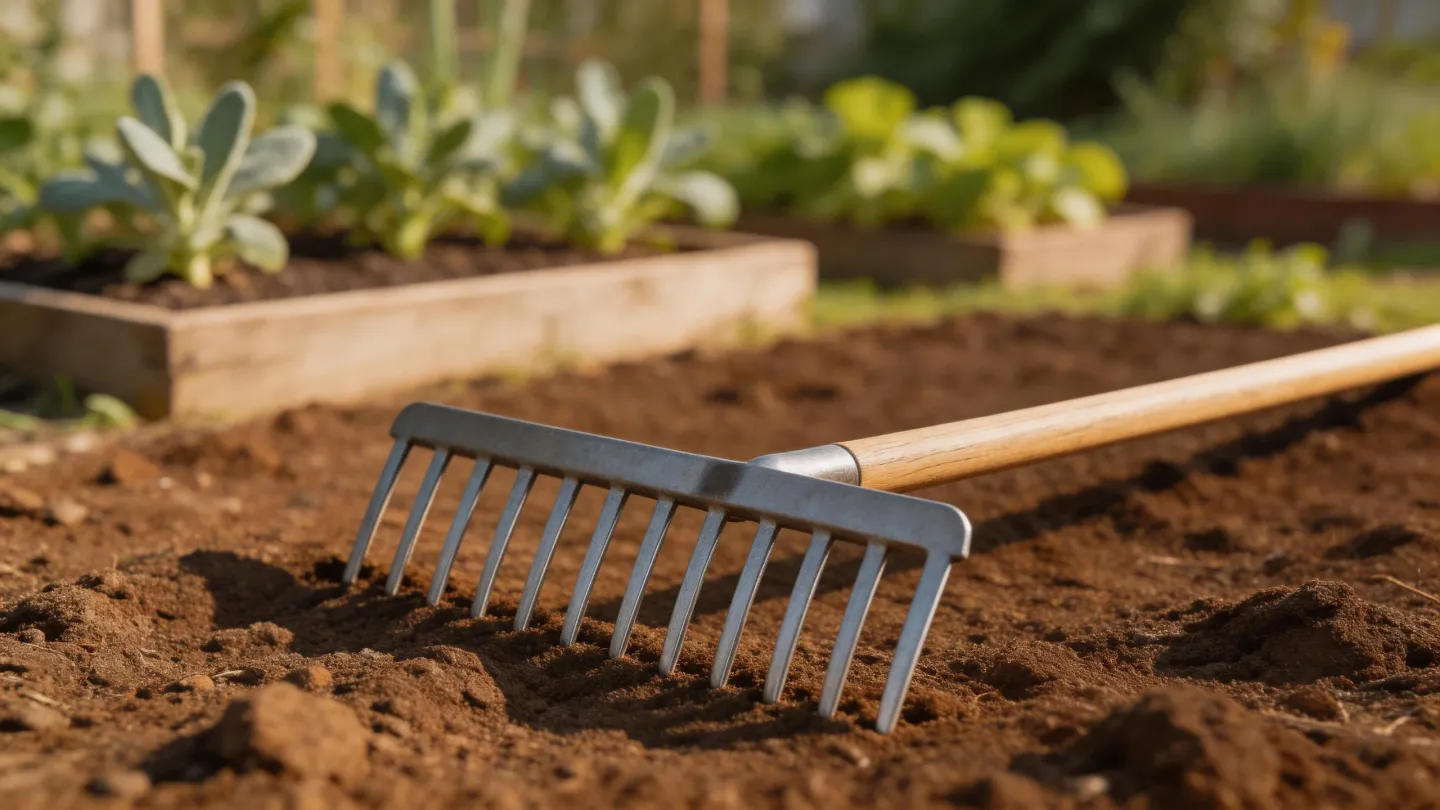
The garden rake — a flat-headed soil rake, not a spring-tine leaf rake — is one of those tools that seems simple until you realise how many tasks it performs. Monty Don uses his rake constantly in spring when preparing seed beds, levelling soil, and creating that fine, crumbly surface tilth that seeds need to germinate successfully. It is, he has noted, the tool that turns rough-dug soil into something you can actually plant in.
A good soil rake has a head of about 30 centimetres width with 12 to 14 short, sturdy teeth set at right angles to the shaft. Unlike a leaf rake, which is light and flexible, a soil rake is rigid and heavy enough to break up clods and level the ground. The technique is straightforward but requires a light touch: draw the rake across the soil surface using the teeth to break up lumps, then flip it over and use the flat back to smooth and level the surface. Repeat until you have a fine, even tilth. Monty emphasises that the soil should be dry enough to crumble — raking wet soil creates a smeared, compacted surface that does more harm than good.
Beyond seed bed preparation, the rake is invaluable for spreading mulch evenly, clearing debris from borders, levelling gravel paths, and working top dressing into lawns. It is also surprisingly useful for marking out straight drills for sowing seeds — simply press the handle into the soil to create a shallow furrow of exactly the right depth.
When buying a rake, look for a head made from a single piece of forged or welded steel — not thin stamped metal that will bend when it meets a stone. The teeth should be firmly attached and slightly angled forward for efficient soil movement. The shaft should be straight-grained ash, at a length that allows you to rake comfortably without stooping. For most people, a shaft length of 150 to 160 centimetres is about right. Avoid rakes with overly wide heads, as they become unwieldy and hard to control.
"For a fine tilth, nothing beats a good rake. It transforms rough ground into a seed bed in minutes. Every gardener needs one."
— Monty Don
Where to Buy
Prices checked April 2026. As an Amazon Associate we earn from qualifying purchases.
Tool 06 of 07
6. The Dutch Hoe
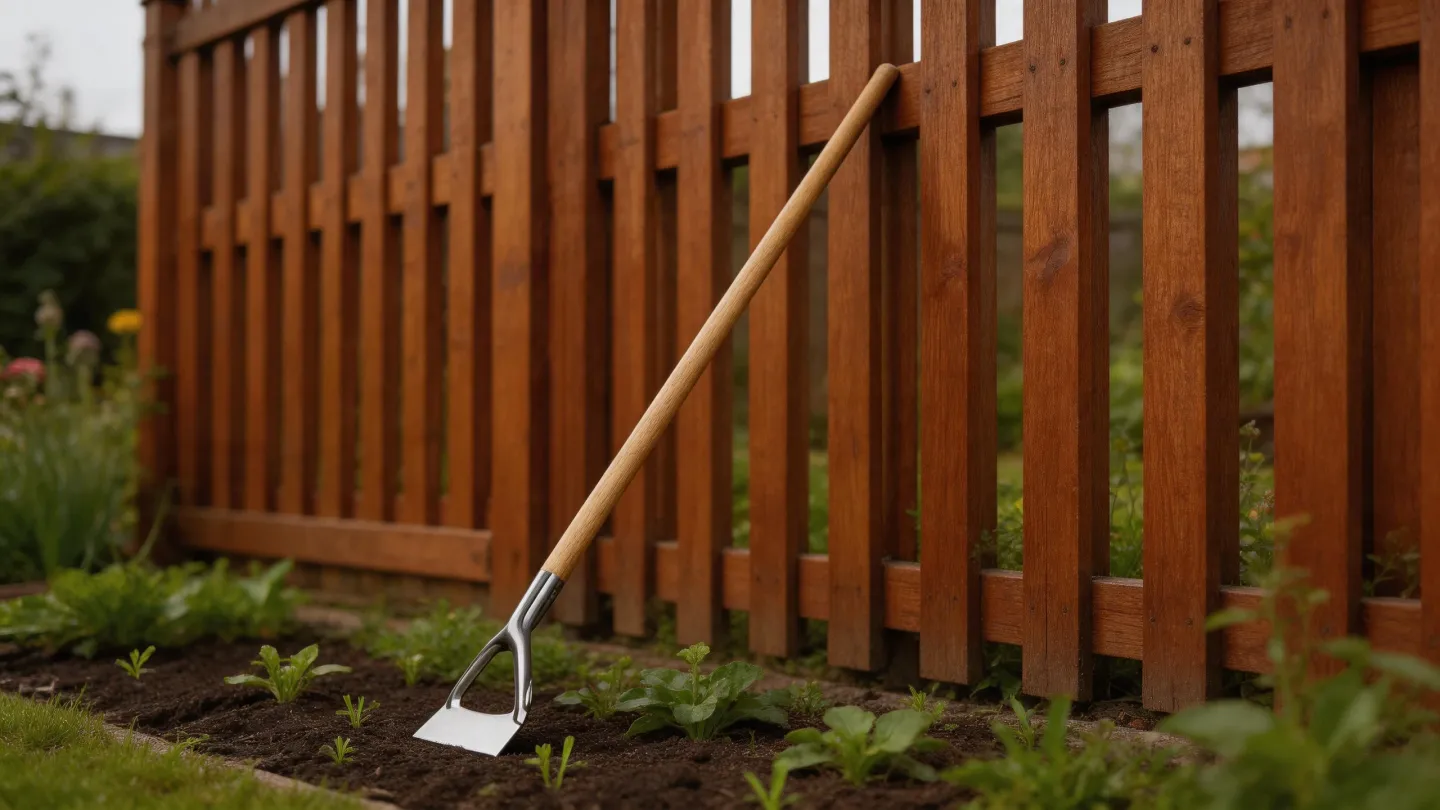
If there is one tool that separates a well-maintained garden from a neglected one, it is the hoe. Monty Don is a passionate advocate for regular hoeing, which he considers the single most effective and efficient method of weed control. His weapon of choice is the Dutch hoe — a flat, D-shaped or triangular blade mounted on a long shaft that you push along just beneath the soil surface to sever weed seedlings from their roots.
The beauty of the Dutch hoe lies in its simplicity. You work it standing upright, pushing the blade forward through the top centimetre of soil in a smooth, rhythmic motion. The sharp edge slices through weed roots without disturbing the soil structure below. On a dry, sunny day, the severed weeds shrivel and die within hours. Monty's rule of thumb is to hoe on a dry morning so that the cut weeds desiccate in the afternoon sun. Hoeing in wet weather is largely pointless, as the weeds simply re-root themselves in the moist soil.
The key to effective hoeing is frequency. Monty recommends hoeing every week or two during the growing season, catching weeds when they are tiny seedlings rather than waiting until they are established. A weekly pass with the hoe takes just a few minutes per bed and eliminates weeds before they compete with your plants for water, light, and nutrients. It is far less work than occasional marathon weeding sessions, and it keeps beds looking immaculate.
When buying a Dutch hoe, the blade must be sharp — this is the single most important factor. A blunt hoe pushes weeds aside rather than cutting them. Look for a blade made from tempered steel that can be sharpened with a file. The blade angle should allow you to push it along the surface without digging in or skating over the top. The shaft should be long enough that you can work standing fully upright — stooping with a hoe defeats its purpose entirely. Ash shafts are traditional and excellent; aluminium shafts are lighter and suit gardeners who find wooden tools tiring to use.
"A hoe used regularly means weeding is never a chore. Ten minutes a week with a sharp hoe and you will never have a weed problem. It is the most underrated tool in the garden."
— Monty Don
Where to Buy
Prices checked April 2026. As an Amazon Associate we earn from qualifying purchases.
Tool 07 of 07
7. The Garden Knife
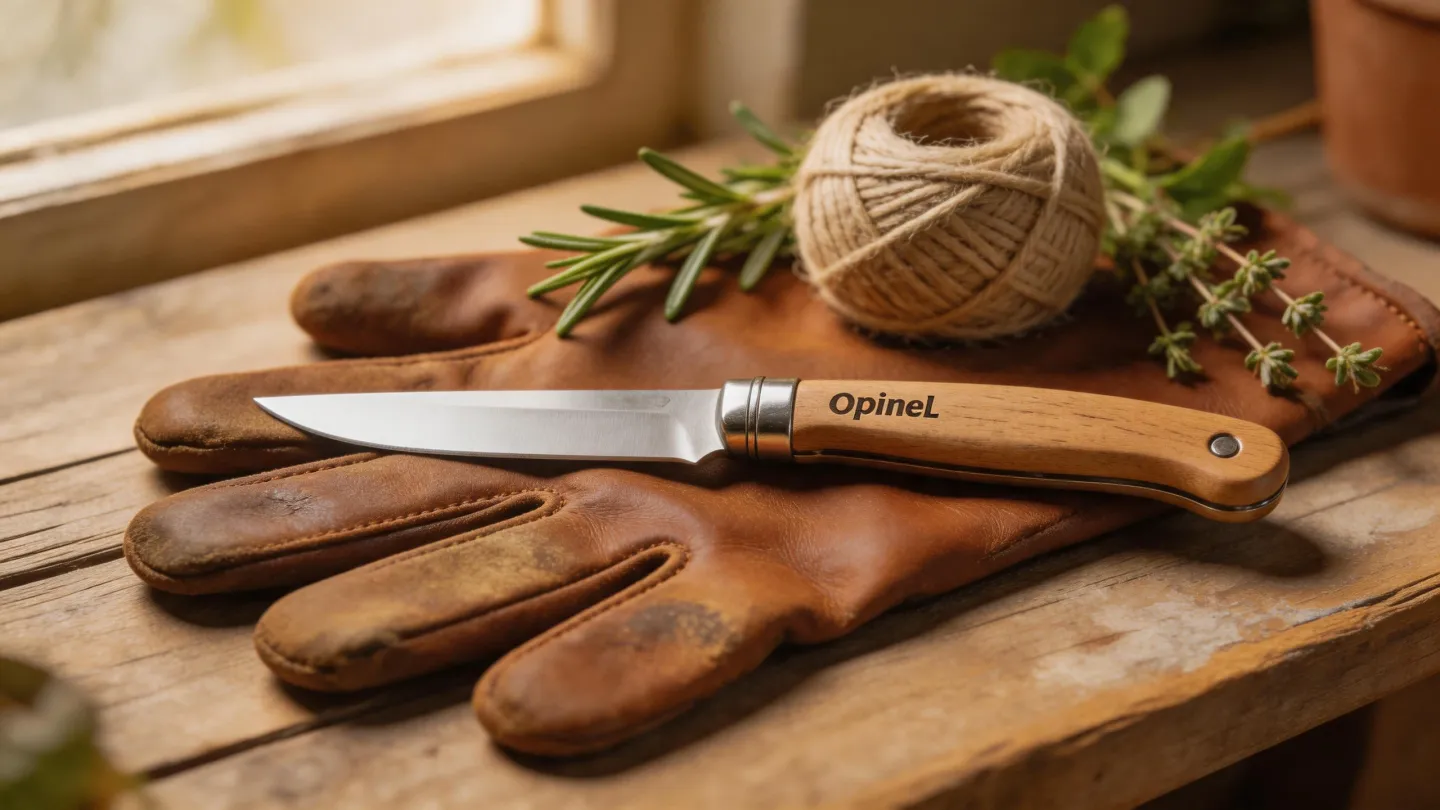
The garden knife is perhaps the most overlooked tool on this list, yet Monty Don considers it essential. He carries a folding pocket knife whenever he is working outdoors, and it gets used dozens of times a day for tasks that would otherwise require fetching another tool. Cutting string, opening bags of compost, taking cuttings, trimming off dead leaves, sharpening a dibber, scraping soil from a label — the knife handles all of it quietly and efficiently.
A good garden knife has a folding carbon steel blade of about 8 centimetres, with a slight curve to the cutting edge that makes slicing motions effortless. Some gardeners prefer a fixed-blade knife worn in a belt sheath, but Monty favours a folding knife that slips safely into a pocket. The blade should lock open firmly — a knife that folds on your fingers mid-cut is dangerous. Carbon steel is preferred over stainless steel for a garden knife because it takes a sharper edge and is easier to resharpen in the field with a pocket stone.
In the garden, the knife truly comes into its own for propagation. Taking softwood cuttings requires a razor-sharp blade that makes a clean cut just below a leaf node, and a garden knife, properly sharpened, does this perfectly. It is also invaluable for grafting, though this is a specialised skill. More prosaically, the knife is the tool you use to cut twine to length when tying in climbers, to slice open compost bags, to whittle a pointed end on a bamboo cane, and to scrape your boots clean when the clay gets sticky.
When buying a garden knife, prioritise blade quality over everything else. The steel should be high-carbon and capable of holding a sharp edge. The handle material is less important — wood, bone, and synthetic all work well — but the handle shape should fit comfortably in your hand. Test the folding mechanism to ensure it opens smoothly and locks positively. Opinel knives, made in France since 1890, offer outstanding value with their carbon steel blades and simple twist-lock mechanism. For something more traditionally horticultural, the Victorinox garden knife and the classic budding and grafting knives from Sheffield still set the standard.
"A knife should be with you always in the garden. You will use it more than you think — for string, for cuttings, for a hundred small tasks that nothing else does quite as well."
— Monty Don
Where to Buy
Prices checked April 2026. As an Amazon Associate we earn from qualifying purchases.
Maintenance
How to Care for Your Tools
Monty Don is fastidious about tool care, and with good reason: a well-maintained tool performs better, lasts longer, and is safer to use. His routine is simple and takes only a few minutes. After every session in the garden, he wipes each tool clean with a rag to remove soil, then gives the metal parts a light coat of oil. He keeps an oily rag — usually soaked in camellia oil or linseed oil — tucked in his back pocket for exactly this purpose. This single habit, performed consistently, prevents rust from taking hold and keeps blades cutting cleanly.
At the end of each growing season, Monty does a more thorough maintenance pass. He sharpens spade and hoe blades with a flat mill file, restoring the cutting edge that dulls through a season of contact with soil and stones. Secateur blades are sharpened with a diamond file or whetstone, maintaining the original bevel angle. Wooden handles receive a coat of raw linseed oil, which penetrates the grain and prevents the wood from drying out, cracking, and eventually snapping. Any loose handles are tightened, and worn or damaged components — particularly secateur springs and blades — are replaced. Finally, he stores every tool hanging on a hook or rack in a dry shed, never standing on a damp floor where moisture can wick into handles and corrode metal fittings. This annual ritual takes no more than an afternoon and ensures that each tool emerges in spring as sharp and ready as the day it was bought.
Common Questions
Frequently Asked Questions
Where does Monty Don buy his gardening tools?
Monty Don has long favoured tools from Sneeboer, a Dutch family forge that has been making hand-forged garden tools since 1913. He also uses tools from traditional British manufacturers. Many of his preferred tools can be purchased directly from Sneeboer's website, specialist garden tool retailers like the Garden Tool Company, and occasionally from Amazon.
How much should I spend on garden tools?
Monty Don's philosophy is 'buy once, buy well.' A quality spade costs between £40 and £90, a good pair of secateurs between £25 and £60, and a hand-forged trowel like the Sneeboer around £50. While this may seem expensive compared to budget tools, well-made tools last decades with proper care — making them far cheaper in the long run than replacing flimsy tools every few years.
What is the single most important garden tool?
According to Monty Don, if he could only have one tool it would be a trowel — specifically the Sneeboer Old Dutch Style Planting Trowel. He has described it as the tool he reaches for more than any other. It is versatile enough for planting, weeding, dividing small perennials, and working in containers. That said, for larger garden work, a spade and fork are equally indispensable.
Should I buy stainless steel or carbon steel tools?
Both have merits. Stainless steel tools resist rust and are easier to maintain, making them a good choice for casual gardeners. Carbon steel tools, favoured by Monty Don and many professional gardeners, hold a sharper edge and are generally stronger, but they require regular oiling to prevent rust. Sneeboer uses a special boron steel alloy that combines the best qualities of both. The key is to buy quality regardless of the steel type.
How do I maintain my garden tools like Monty Don?
Monty Don cleans his tools after every use by wiping off soil with a rag and giving metal parts a light coat of oil — he keeps an oily rag in his back pocket for this purpose. At the end of the season, he sharpens blades with a diamond file, tightens any loose handles, and applies linseed oil to wooden shafts. Secateurs should be dismantled, cleaned, and sharpened regularly. Store tools in a dry shed, ideally hanging on hooks rather than standing on the floor.