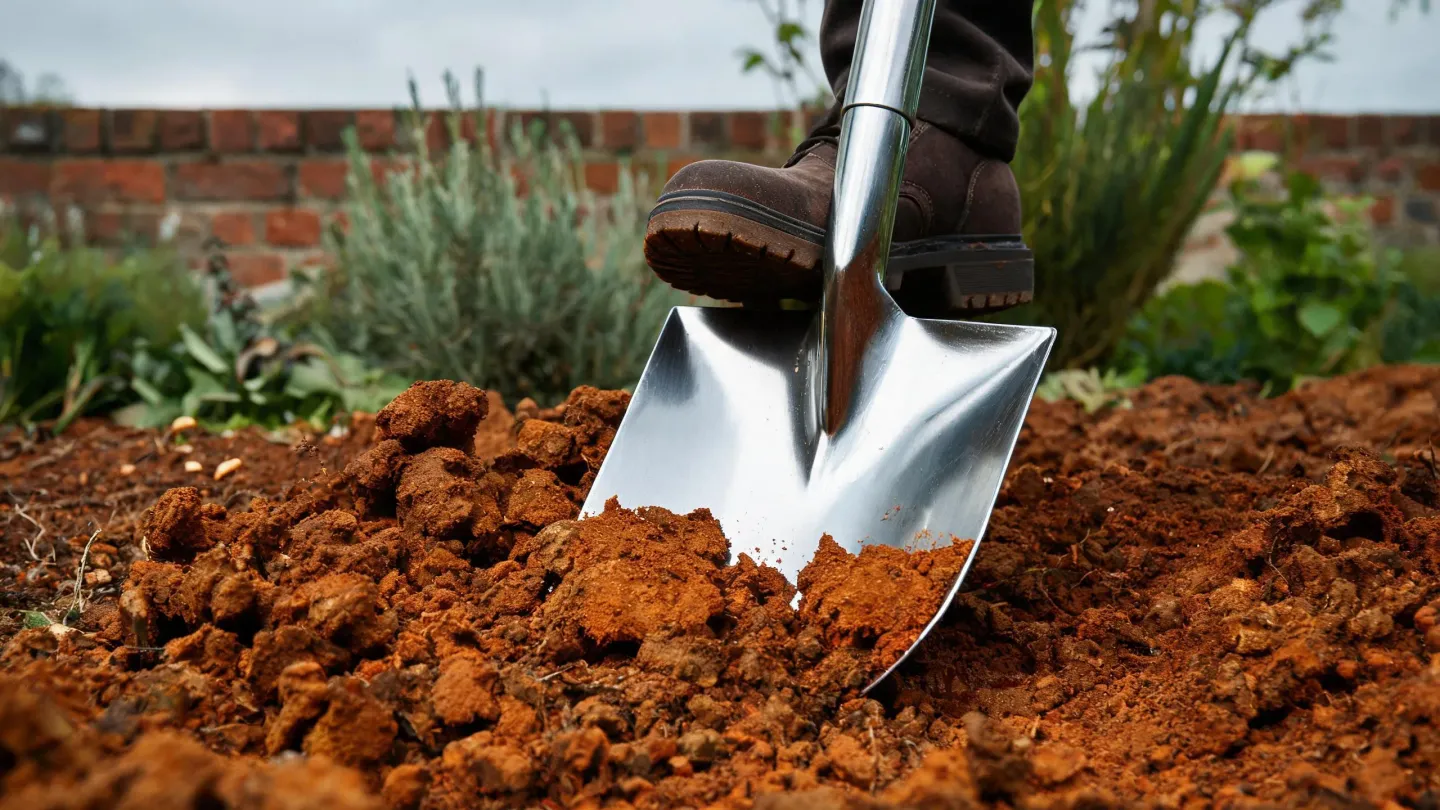
Best for Clay
Draper Heritage 99014 Stainless Steel Digging Spade (Ash Handle)
Stainless blade cuts clean through clay · Rated 4.6/5 · From $105
Check Price on Amazon for Draper Heritage 99014 Stainless Steel Digging Spade (Ash Handle)Heavy clay is the most demanding soil to dig. It is dense, sticky when wet and brick-hard when dry — and a cheap spade will fight you every step of the way, clogging with soil and bending at the neck. The good news is that the right spade makes an enormous difference, and you do not need to spend a fortune to get one.
Why Stainless Steel Is Essential for Clay
For clay soil, the blade material matters more than anything else. A mirror-polished stainless steel blade has a smooth, low-friction surface that wet clay simply will not stick to. It slices through heavy ground cleanly, where a carbon-steel blade drags, clogs and forces you to stop and scrape it clean every few cuts. Stainless also shrugs off the rust that damp clay encourages. If you can, choose stainless for clay — though a good carbon spade still works well if you do not mind cleaning it more often.
A Little Weight Helps
Unlike light sandy soil, clay rewards a spade with some heft. A full-size digging spade carries momentum into compacted ground, so the blade penetrates with less effort from you. Look for a solid-socket joint between blade and shaft — clay puts real strain on that joint, and a weak ferrule connection will loosen quickly under the load.
The Best Spades for Clay Soil
Our stainless pick is ideal for clay; the carbon Spear & Jackson options are cheaper and work well with a little extra care.
| Spade | Best For | Rating | From | |
|---|---|---|---|---|
| Best Overall Spear & Jackson 1180NB Neverbend Carbon Steel Digging Spade Forged carbon steel (Neverbend reinforced) · 2.2 kg | Most gardeners — the proven, best-reviewed workhorse | 4.7/5 | $53 | Check Price for Spear & Jackson 1180NB Neverbend Carbon Steel Digging Spade on Amazon |
| Best Value Spear & Jackson Professional Neverbend Treaded Digging Spade Heavy-duty forged carbon steel, treaded top · 2.3 kg | Budget buyers who still want genuine Spear & Jackson durability | 4.5/5 | $45 | Check Price for Spear & Jackson Professional Neverbend Treaded Digging Spade on Amazon |
| Best Stainless — Ideal for Clay Draper Heritage 99014 Stainless Steel Digging Spade (Ash Handle) Mirror-polished stainless steel · 2 kg | Heavy clay soil, and anyone who wants stainless plus a real ash handle | 4.6/5 | $105 | Check Price for Draper Heritage 99014 Stainless Steel Digging Spade (Ash Handle) on Amazon |
Spear & Jackson 1180NB Neverbend Carbon Steel Digging Spade
Most gardeners — the proven, best-reviewed workhorse
Check Price on Amazon for Spear & Jackson 1180NB Neverbend Carbon Steel Digging SpadeSpear & Jackson Professional Neverbend Treaded Digging Spade
Budget buyers who still want genuine Spear & Jackson durability
Check Price on Amazon for Spear & Jackson Professional Neverbend Treaded Digging SpadeDraper Heritage 99014 Stainless Steel Digging Spade (Ash Handle)
Heavy clay soil, and anyone who wants stainless plus a real ash handle
Check Price on Amazon for Draper Heritage 99014 Stainless Steel Digging Spade (Ash Handle)How to Dig Clay Soil the Easy Way
The right tool is half the battle; timing is the other half. Dig clay when it is moist but not waterlogged — never when it is wet and sticky (you will smear and compact it) or baked hard. The classic approach is to dig over clay in autumn and leave the clods rough, letting winter frosts break them down naturally into a workable tilth by spring. Drive the blade in vertically with your foot, lever the soil back, and turn it. Adding organic matter each year is the long game that gradually transforms heavy clay into rich, friable soil.
Clay Soil Spade FAQs
Why is stainless steel best for clay soil?
Clay is sticky and dense. A mirror-polished stainless steel blade has a smooth, low-friction surface that soil does not cling to, so it slices through heavy clay with noticeably less effort than carbon steel — which tends to drag and clog. Stainless also resists the rust that wet clay encourages.
Should a clay-soil spade be heavy or light?
A little weight helps. A heavier digging spade carries more momentum into compacted clay, so it penetrates with less force from you. That said, balance matters more than raw weight — the best clay spades feel solid but well-balanced, not unwieldy.
What is the best technique for digging clay soil?
Timing is everything. Dig clay when it is moist but not waterlogged — never when wet and sticky, or bone dry and rock hard. Work in autumn if you can, then let winter frosts break down the clods. Drive the blade in vertically with your foot, lever back, and turn. Keeping the blade clean and sharp makes a huge difference in clay.