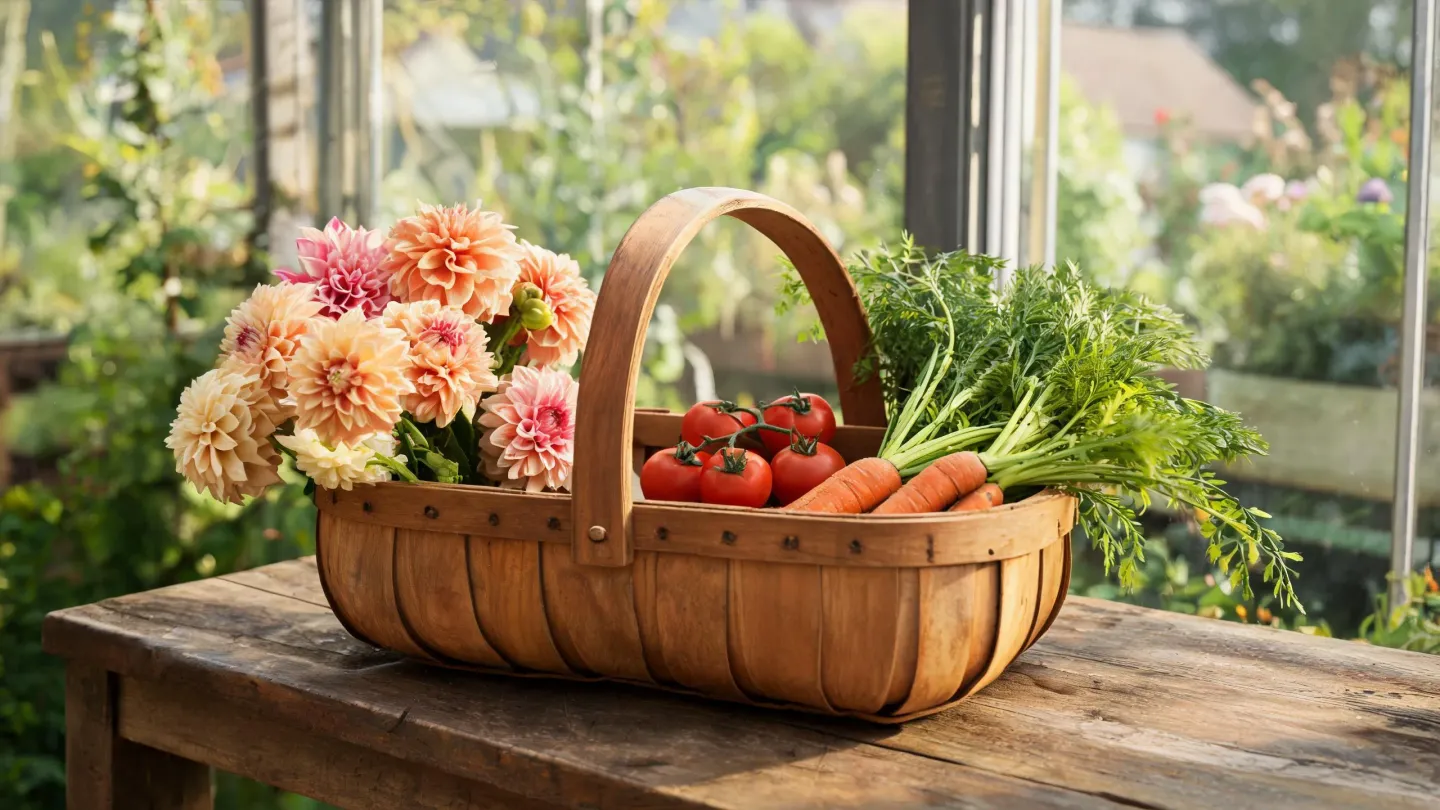
"Trug" now covers everything from a hand-made Sussex heirloom to a £9 plastic tub, and the truth is that no single trug is best at everything — a beautiful willow trug is hopeless for hauling wet soil, and a rubber tub will crush your dahlias. So this is less a ranking than a matching exercise: five good trugs, each the right answer to a different job, with what each one is genuinely bad at as well as good at.
How we chose these trugs
We have not lab-tested every trug on the market. Our picks are based on the things that reliably predict whether a trug lasts and does its job well — the materials and construction, the reputation and guarantees of the makers, and consistent verified owner feedback — cross-referenced with independent reviews such as BBC Gardeners' World. Where a trug is genuinely poor at something, we say so.
The Best Garden Trugs, Reviewed
At a glance — full reviews of each below. Typical UK prices shown.
| Trug | Best For | From | |
|---|---|---|---|
| Best Overall Burgon & Ball Traditional Wooden Trug | Everyday harvesting of flowers, fruit and veg with good looks on a budget. | £37 | Check Price for Burgon & Ball Traditional Wooden Trug |
| Best Heirloom Thomas Smith Royal Sussex Trug | A keepsake harvesting basket for flowers and veg — and a special gift. | £50 | Check Price for Thomas Smith Royal Sussex Trug |
| Best for Heavy & Wet Jobs Red Gorilla Tubtrug (15L) | Soil, weeds, water, prunings and tools — the mucky, heavy jobs. | £9 | Check Price for Red Gorilla Tubtrug (15L) |
| Best for Washing Veg Colander / Draining Trug | Allotment and veg growers harvesting muddy roots and salad leaves. | £10 | Check Price for Colander / Draining Trug |
| Best Hands-Free Burgon & Ball Hip Trug | Deadheading and cut-and-come-again picking on the move. | £5 | Check Price for Burgon & Ball Hip Trug |
Burgon & Ball
Burgon & Ball Traditional Wooden Trug
FSC poplar wood, solid brass pins · 57 × 27 cm
The sensible wooden pick for most gardeners — classic looks without the heirloom price.
This is the trug most people should buy. It has the proper boat shape and traditional good looks of a hand-made wooden trug, but in FSC-certified poplar held together with solid brass pins rather than costly chestnut and willow — which keeps it light and roughly a third cheaper than a genuine Sussex trug. At 57 cm it is the versatile medium size, and it is widely stocked at John Lewis and on Amazon, so it is easy to buy and replace.
Pros
- Handsome traditional shape at a sensible price
- FSC poplar with solid brass pins, not staples
- Light to carry and easy to find in stock
Cons
- Poplar is softer and less durable than chestnut + willow
- Still must be kept dry — not an all-weather tool
- Not built to be handed down like a real Sussex trug
Buy it if: Everyday harvesting of flowers, fruit and veg with good looks on a budget.
Skip it if: You want the genuine heritage original, or a tough all-weather tub.
Thomas Smith
Thomas Smith Royal Sussex Trug
Handmade: coppiced English chestnut + cricket-bat willow · Numbered sizes
The real thing — a hand-made heirloom for gardeners who will cherish and care for it.
This is the original, still hand-made in Sussex by the firm Queen Victoria bought from in 1851. The rim, handle and feet are cleft from coppiced chestnut and steam-bent; the shallow body is thin cricket-bat willow, tacked on by hand. Every trug is serial-numbered and guaranteed, and it takes an apprentice around three years to learn the craft. Looked after, it will outlast the gardener who bought it — but you are paying for genuine handwork, and it asks to be treated with a little respect.
Pros
- Genuinely hand-made in Sussex from chestnut + cricket-bat willow
- Serial-numbered with a multi-year guarantee
- Beautiful, lasts decades, and makes a memorable gift
Cons
- Expensive for a basket
- The willow can split if left wet or neglected — needs keeping dry and the odd oiling
- No good for heavy, wet or mucky loads; often made to order with a wait
Buy it if: A keepsake harvesting basket for flowers and veg — and a special gift.
Skip it if: You want a cheap workhorse or something to leave out in all weathers.
Red Gorilla
Red Gorilla Tubtrug (15L)
Flexible food-grade recycled rubber · 15 litre
Not a real trug at all, but the tough plastic tub every gardener ends up owning.
The flexible recycled-rubber Tubtrug (now sold as Gorilla Tubs) is the opposite of a pretty willow trug, and that is the point. It shrugs off soil, water, weeds, prunings and tools, squashes to fit awkward loads, stacks for storage and rinses clean. It costs about the price of a coffee and comes in every size and colour. Buy a bright one so you can always find it, and buy the 15-litre for general use.
Pros
- Near-indestructible and fully weatherproof
- Flexible, stackable and easy to rinse clean
- Very cheap; huge range of sizes and colours
Cons
- Utilitarian looks — no charm
- The deep tub shape crushes cut flowers, so it is poor for the trug’s traditional job
- The rubber can perish over years if left baking in the sun
Buy it if: Soil, weeds, water, prunings and tools — the mucky, heavy jobs.
Skip it if: You want a handsome basket for gathering flowers and delicate produce.
Various
Colander / Draining Trug
Rigid plastic with a perforated draining base · approx. 8 – 10 litre
A clever plastic trug that lets you harvest and hose down veg in one go.
If you grow your own root veg and salad, this is a genuinely useful thing. The perforated base means you can pull carrots and potatoes straight into it, run the hose over the lot in the garden, and let the soil and water drain away before you reach the kitchen — no muddy sink. It is cheap, tough and dishwasher-easy to clean. It is a specialist, though, not an all-rounder.
Pros
- Drain holes let you rinse veg as you pick
- Cheap, tough and easy to clean
- Saves carrying mud into the house
Cons
- Holes mean loose soil and small items fall through
- Single-purpose — not for cut flowers or carrying soil
- Plastic, utilitarian looks
Buy it if: Allotment and veg growers harvesting muddy roots and salad leaves.
Skip it if: You mostly gather flowers, or want one do-everything carrier.
Burgon & Ball
Burgon & Ball Hip Trug
Flexible neoprene, clips to a belt · approx. 3 litre
A belt-clip pouch for deadheading and picking with both hands free.
This is not a carrying basket and does not pretend to be — it is a soft neoprene pouch that clips onto your belt or waistband, leaving both hands free for snipping and picking as you work down a border. It squashes flat in a pocket when you are done and costs next to nothing. Think of it as an accessory to a proper trug, not a replacement.
Pros
- Both hands free — clips to your belt
- Squashes flat for storage; almost free
- Perfect for deadheading on the move
Cons
- Small (about 3 litres)
- Soft sides give no protection to delicate produce
- No substitute for a real carrying trug
Buy it if: Deadheading and cut-and-come-again picking on the move.
Skip it if: You need to carry a real harvest or a set of tools.
As an Amazon Associate we earn from qualifying purchases, at no extra cost to you. Genuine hand-made Sussex trugs are also sold direct by makers such as Thomas Smith (sussextrugs.com).
Which Trug Should You Buy?
Forget "best" — buy for the job you actually do most:
- You gather flowers and veg to bring indoors. A wooden trug. The shallow shape lays stems flat without bruising. Start with the Burgon & Ball; splash out on a Sussex trug if you want it to last a lifetime.
- You do the heavy, wet, mucky jobs — moving soil, weeds, water, prunings. A plastic Tubtrug, 15 litres or bigger. Do not waste a willow trug on this.
- You grow muddy root veg and salad. A colander trug, so you can hose the crop down in the garden and drain it before the kitchen.
- You spend hours deadheading and picking on the move. A hip trug clipped to your belt, both hands free — alongside a proper trug for the harvest.
- It is a gift for a keen gardener. A hand-made Royal Sussex trug, every time. Nothing else has the same craft or story.
- You have a bad back or big harvests. Do not buy the biggest trug — a full large trug is heavy and awkward. Two smaller loads beat one back-breaker, and a lighter poplar or plastic trug is kinder than a big solid one.
On size: a medium trug of around 50–57 cm is the sweet spot for most gardens. Only go large if you routinely harvest in bulk — an oversized trug spends most of its life half-empty and heavy.
Wooden Trug vs Plastic Tub, Side by Side
| Traditional Wooden Trug | Plastic / Tub Trug | |
|---|---|---|
| Best load | Light — flowers, veg, eggs | Heavy or wet — soil, weeds, water |
| Protects delicate produce | Yes — shallow, flat | No — deep tub crushes flowers |
| Weatherproof | Keep dry; not for leaving out | Fully weatherproof |
| Upkeep | Dry storage + occasional oil | Rinse and forget |
| Lifespan | Decades with care | Years; can perish in UV |
| Typical price | £37 – £90 | £5 – £15 |
The honest answer for most gardeners is to own both: a wooden trug for the gentle, pretty jobs and a cheap plastic tub for the heavy, wet ones. Between them they cost very little, and each does what the other cannot.
A Note on the Royal Sussex Trug
It is worth knowing what you are paying for with a genuine Sussex trug. The design was made famous by Thomas Smith of Herstmonceux, trading since 1829, whose stand at the Great Exhibition of 1851 caught the eye of Queen Victoria — hence "Royal" Sussex. A real one is cleft from coppiced chestnut, steam-bent by hand, and clad in thin cricket-bat willow; an apprentice takes around three years to learn the craft. That is why it costs more than a factory basket — and why, kept dry and lightly oiled, it lasts for generations. It is a buy-it-for-life object, not a bargain, and worth it only if you will treat it as one.
How to Care for a Wooden Trug
A wooden trug rewards a little care with a very long life, and neglect kills it faster than anything. The one rule that matters: keep it dry. Empty and shake out the soil after use, and never leave it outside in the rain or standing in water — constant damp rots the wood and works the pins loose. Store it indoors or in a dry shed, out of direct sun so it does not dry out and crack.
Once or twice a year, wipe the wood over with a little raw linseed oil to keep it supple and deepen the colour. A plastic Tubtrug, by contrast, asks for nothing but the occasional rinse — which is exactly why it is the one to grab for the muddy jobs.
Garden Trug FAQs
What is the best garden trug to buy?
For most gardeners the best all-round choice is the Burgon & Ball Traditional Wooden Trug (around £37) — it has the classic looks and shape at a sensible price. If you want the genuine heritage original and a lifetime heirloom, buy a hand-made Thomas Smith Royal Sussex Trug (from about £50). For heavy, wet or mucky work, a flexible plastic Tubtrug (around £9) is the practical choice, and many gardeners own both a wooden trug and a plastic tub.
Are expensive Sussex trugs worth it?
For the right buyer, yes. A genuine hand-made Royal Sussex trug costs several times more than a mass-produced one, but it is a real piece of craftsmanship that, kept dry and lightly oiled, lasts for decades and often outlives its owner — the "buy once, buy well" philosophy. It also makes a memorable gift. If you simply want a working basket to fill with weeds and leave in the rain, though, it is the wrong tool and a cheap plastic tub will serve you better.
What is a garden trug used for?
A garden trug is a shallow, boat-shaped basket used to gather and carry light garden produce — cut flowers, herbs, fruit, vegetables and eggs — as well as small hand tools, twine and seed packets. Its shallow open shape lets you lay long-stemmed flowers or freshly picked veg flat without crushing them, which is why it is a favourite harvesting basket in English gardens.
Why is it called a Sussex or Royal Sussex trug?
The trug in its familiar form was developed in the 19th century in Sussex, most famously by Thomas Smith of Herstmonceux. He exhibited his trugs at the Great Exhibition of 1851, where Queen Victoria ordered some for the Royal Family — and the design has been known as the Royal Sussex Trug ever since. Traditional Sussex trugs are hand-made from a steam-bent sweet chestnut frame with thin cricket-bat willow boards.
How do you care for a wooden garden trug?
Keep it dry. Empty and shake out the soil after use, and never leave a wooden trug outside in the rain or standing in water, as constant damp rots the wood and loosens the pins. Store it indoors or in a dry shed, out of direct sunlight so it does not dry out and crack. An occasional light wipe of raw linseed oil, once or twice a year, keeps it supple and helps it last for decades.