Also Available At
Prices checked April 2026. As an Amazon Associate we earn from qualifying purchases.
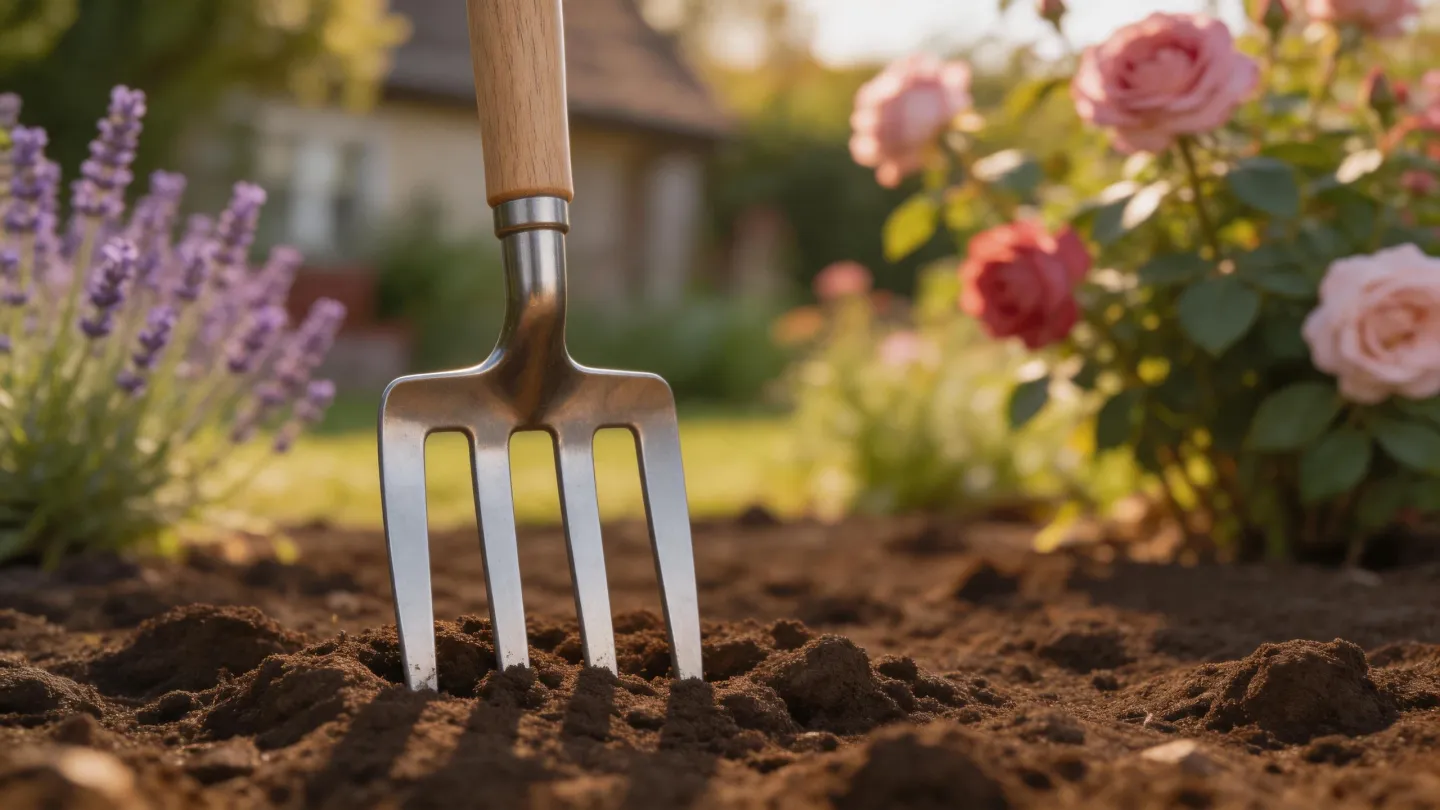
The fork is the spade's essential partner. Where a spade cuts and slices, a fork loosens and aerates. Monty Don uses a border fork — slightly smaller than a full-size digging fork — because it is lighter, more manoeuvrable, and better suited to working around established plants. At Longmeadow, where beds are densely planted and every inch counts, the border fork earns its place every single day.
Why a Border Fork, Not a Full Digging Fork
A border fork typically has four flat tines, each about 23 centimetres long, mounted on a shaft of roughly 70 centimetres. The tines should be square or rectangular in cross-section for maximum strength — round tines tend to bend when hitting stones or thick roots. The fork is indispensable for loosening compacted soil without inverting it, which preserves the soil structure and the ecosystem of organisms that live within it. This is particularly important in no-dig gardening, an approach Monty has increasingly embraced.
Tasks That Earn a Fork Its Place
Beyond soil work, the fork excels at lifting plants for division, working compost and mulch into the surface of beds, breaking up clods after digging, and harvesting root vegetables like potatoes and parsnips without slicing them in half. Monty also uses his fork to aerate lawns by driving it in at regular intervals across compacted turf — a simple technique that dramatically improves drainage and grass health.
What to Look For When Buying a Fork
When selecting a fork, the same construction principles apply as with a spade: look for a solid socket connection and a comfortable handle. The tines should be forged, not stamped, and made from hardened steel that will hold up against stony ground. Test the tines by pressing them sideways — they should flex slightly but spring back straight. If they bend easily and stay bent, the steel is too soft. A good fork will ring like a tuning fork when you tap it against something solid.
"A fork is essential for working compost into soil. I use mine more than my spade, if I am honest. It does everything a spade does, but more gently."
— Monty Don
Ready to buy?
Get the Border Fork from £35
Read More
This is part of our complete monty don gardening tool guide covering all seven essentials.
See all 7 essential tools